Reserve your Fridays in October 2026 for four cutting-edge talks on Quantum Technology! Gain insights, practical perspectives, and a roadmap of opportunities across materials, devices, photonics, and algorithms in the Quantum Landscape from leading researchers across Indian Institute of Science (IISc) and Aalto University, Finland!
Step into the forefront of quantum innovation with the IISc–Aalto Quantum Technology Webinar Series 2026. Join leading researchers from the Indian Institute of Science (IISc) and Aalto University for a four-part webinar series exploring:
- Quantum materials
- Superconducting quantum devices
- Quantum optics and photonic quantum computing and,
- Quantum algorithms
From the experimental and theoretical frontiers of quantum materials to recent breakthroughs in superconducting quantum circuits, photonic quantum processors, quantum machine learning, and quantum-enabled materials simulations, this webinar series offers an exciting journey through the technologies driving the second quantum revolution.
The webinars are free and open for everyone! Registration is mandatory for joining the webinars.
Link for Registration; ‘Quantum Webinars’
Webinar Schedule
The first three webinars are organized during 14.30 – 16.30 IST India/12.00-14.00 EST Helsinki.
The fourth webinar on 30.10.26 is organized during 15.30 – 17.30 India/12.00-14.00 EST Helsinki.
Speakers and Bios; Eight eminent speakers from IISc and Aalto University come together in this webinar series to deliver talks on diverse topics.
| Date | Topic | Speaker | Title of the Talk |
| Friday, 9 October 2026 | Quantum materials | Prof. Arindam Ghosh, IISc | An overview of Quantum Ecosystem in India/IISc |
| Prof. Chandni Usha, IISc | Two-dimensional superlattices- moiré and beyond | ||
| Prof. Jose Lado, Aalto University | Machine learning Hamiltonians from experimental measurements | ||
| Friday, 16 October 2026 | Superconducting quantum devices | Dr. Mahdi Moghaddam, Aalto | An overview of Quantum Ecosystem in Finland/Aalto |
| Prof. Mikko Möttönen, Aalto University | Constituents of an Autonomous Quantum Processing Unit | ||
| Prof. Vibhor Singh, IISc | TBC | ||
| Friday, 23 October 2026 | Quantum optics and photonic quantum computing | Prof. C M Chandrasekhar, IISc | Photonic Quantum Computing Platform Using Multi-Degree-of-Freedom of Photons |
| Prof. Anton Zasedtelev, Aalto University | TBC | ||
| Friday, 30 October, 2026 | Quantum algorithms | Prof. Tapio Ala-Nissilä, Aalto University | Magic of Quantum Machine Learning |
| Prof. Phani Motamarri, IISc | Ab initio materials simulations at scale: From Exascale HPC to Quantum-centric supercomputing |

Chandni Usha is an Associate Professor in the Department of Instrumentation and Applied Physics at the Indian Institute of Science (IISc), Bengaluru. Her research focuses on electron transport in low-dimensional quantum materials, including graphene, van der Waals heterostructures, and ultrathin metallic systems. Prior to joining IISc in 2017, she held postdoctoral positions at the Institute for Quantum Information and Matter (IQIM), California Institute of Technology, USA, and the Tata Institute for Fundamental Research (TIFR), Mumbai. She received her M.S. and Ph.D. in Physics from the Indian Institute of Science, Bengaluru.
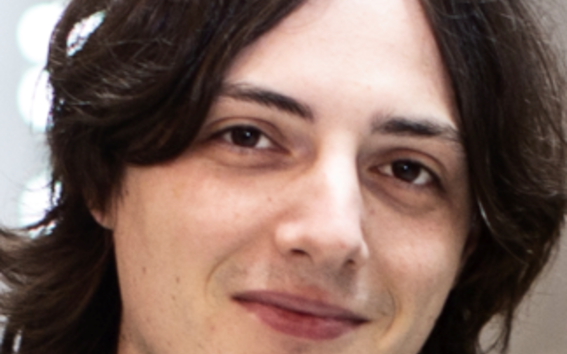
José L. Lado is an Assistant Professor of Theoretical Physics at Aalto University, Finland. His research lies at the intersection of quantum materials, condensed matter physics, and quantum many-body theory, with a particular focus on van der Waals materials, strongly correlated systems, topology, and machine learning for quantum materials. His work combines theoretical modeling with close collaborations with experimental groups to uncover and engineer emergent quantum phenomena, including correlated electronic states, topological excitations, multiferroicity, and heavy-fermion physics. He also develops advanced computational approaches based on tensor networks and neural-network methods for studying quantum many-body systems and noisy quantum devices. Prior to joining Aalto University in 2019, he was an ETH Fellow at ETH Zurich and obtained his Ph.D. in Theoretical Physics from the International Iberian Nanotechnology Laboratory (INL), Portugal.
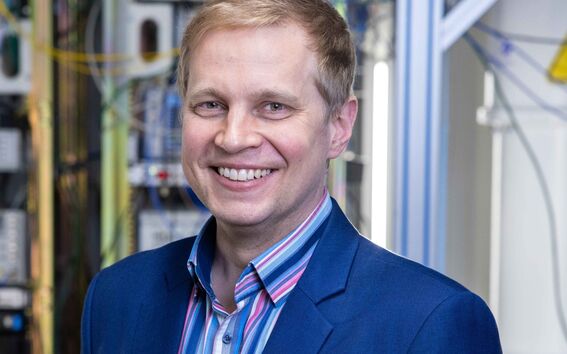
Mikko Möttönen is an Academy Professor in the Department of Applied Physics at Aalto University, Finland, where he leads the Quantum Computing and Devices research group. His research spans quantum physics and quantum technologies, with a primary focus on superconducting quantum circuits for scalable quantum computing. His group has pioneered several breakthroughs, including the development of ultra-sensitive bolometers, quantum-circuit refrigerators for qubit initialization, and high-coherence superconducting qubits such as the unimon and millisecond-lifetime transmon. His broader research interests include quantum thermodynamics, quantum sensing, and microwave quantum electronics. Prof. Möttönen has also made significant contributions to the commercialization of quantum technologies as a co-founder of IQM Quantum Computers and QMill. He received his M.Sc. and D.Tech. in Technical Physics from the Helsinki University of Technology (now Aalto University) and carried out postdoctoral research at the University of California, Berkeley.
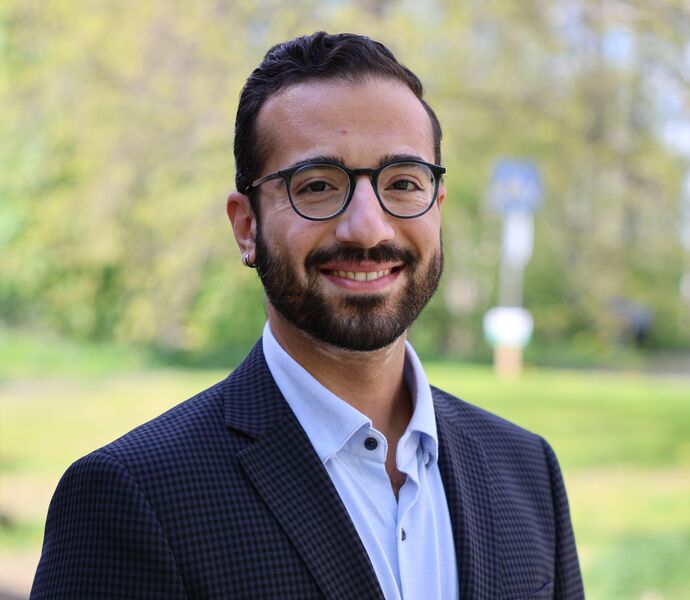
Mahdi Moghaddam is Manager of the Finnish Quantum Flagship (FQF) and ResQ, the research and infrastructure pillar of InstituteQ, the Finnish quantum Institute. He works at the intersection of research, strategy, and policy in quantum science and technology, with a focus on strengthening national and international partnerships and collaboration across the quantum ecosystem.
His work brings together universities, research organizations, industry, and policy stakeholders to advance joint initiatives in research, education, innovation, and international cooperation. Through his roles in the Finnish Quantum Flagship and InstituteQ, he contributes to the strategic development and international positioning of Finland’s quantum ecosystem.
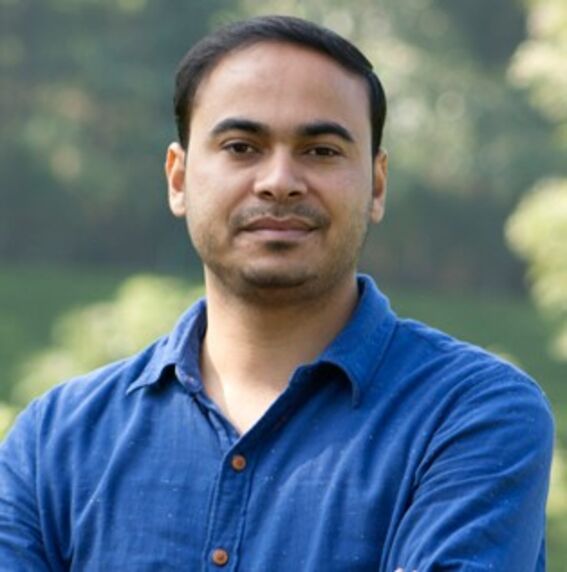
Vibhor Singh is an Associate Professor in the Department of Physics at the Indian Institute of Science (IISc), Bengaluru, where he leads an experimental quantum research group. He received his Ph.D. from the Tata Institute of Fundamental Research (TIFR), Mumbai, and subsequently carried out postdoctoral research at Delft University of Technology (TU Delft), the Netherlands. His research focuses on superconducting quantum circuits, cavity optomechanics, hybrid electromechanical systems, nanomechanics, and low-dimensional electron transport. His group develops novel quantum devices and scalable control technologies for quantum information processing and is a key participant in the Quantum Computing Thematic Hub at IISc under India’s National Quantum Mission, contributing to the development of indigenous superconducting quantum computing technologies.
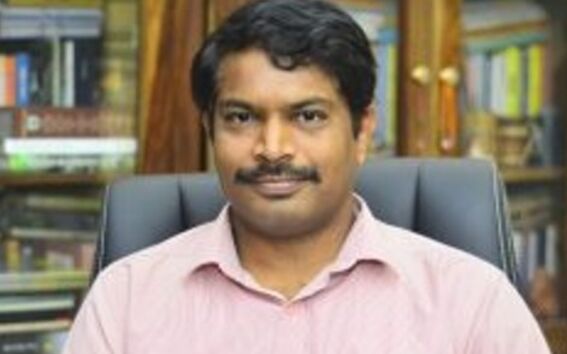
C. M. Chandrashekar is an Associate Professor in the Department of Electronic Systems Engineering (DESE)at the Indian Institute of Science (IISc), Bengaluru. He received his M.Sc. (Research) in Physics from the University of Oxford as a Rhodes Scholar and his Ph.D. in Theoretical Physics from the Perimeter Institute for Theoretical Physics, University of Waterloo, Canada. Prior to joining IISc in 2025, he was a Professor at the Institute of Mathematical Sciences (IMSc), Chennai. His research spans quantum information theory, quantum computing, quantum walks, and photonic quantum technologies. His group is a part of Quantum Computing Thematic Hub at IISc under India’s National Quantum Mission and developing programmable photonic quantum computers based on qubits encoded in multiple degrees of freedom of photons, enabling scalable room-temperature quantum computing platforms.
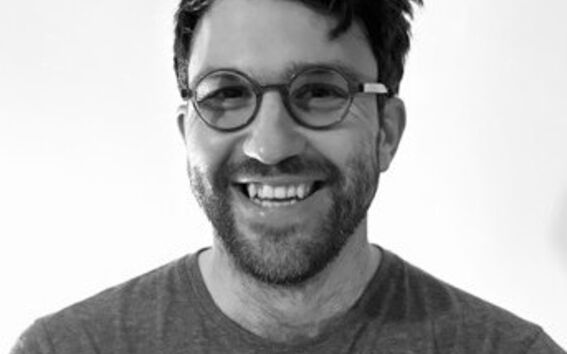
Anton Zasedatelev is an Assistant Professor in the Department of Applied Physics at Aalto University, Finland, where he leads the Macroscopic Quantum Optics research group. He received his Ph.D. in 2016 in molecular spectroscopy and nonlinear optics and subsequently held postdoctoral research positions in the United Kingdom and Austria before joining Aalto University. His research focuses on experimental quantum optics, light–matter interactions, Bose–Einstein condensates, optomechanics, and macroscopic quantum coherence. His group explores quantum phenomena in large-scale light–matter systems and develops ultrafast, energy-efficient optical computing technologies based on exciton-polariton condensates, bridging fundamental quantum physics with next-generation photonic technologies.

Tapio Ala-Nissilä is a Professor of Physics at the Department of Applied Physics, Aalto University, Finland, and Professor of Theoretical Physics and Applied Mathematics at the Department of Mathematical Sciences at Loughborough University, UK. He is also the Head of Interdisciplinary Centre for Mathematical Modeling at Loughborough. He is a highly experienced condensed matter theorist and has supervised, mentored and collaborated with hundreds of scientists worldwide, including two Nobel Laureates. His Multiscale Statistical and Quantum Physics (MSP) group has a long track record in working on problems related to equilibrium and non-equilibrium phenomena in condensed matter and open quantum systems, including quantum thermodynamics. The MSP group currently focuses on two main projects. The first one concerns multiscale and machine-learning-driven modeling of 2D quantum materials, including their electronic and structural properties and applications in quantum technology and devices. The second main project focuses on theory and application of quantum reservoir computing and quantum machine learning. During 2022-2025 T.A-N. was in charge of the buildup of a 20-qubit universal quantum computer at Aalto University as the PI of the national Finnish Quantum Computing Infrastructure (fiqci.fi) project.
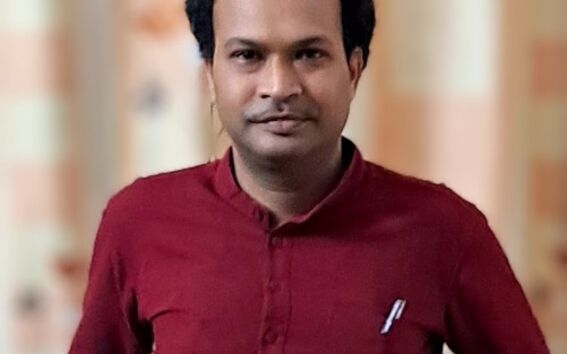
Phani Sudheer Motamarri is an Assistant Professor in the Department of Computational and Data Sciences at the Indian Institute of Science (IISc), Bengaluru, where he leads the MATRIX (Materials-physics & Algorithmic Techniques Research in eXtreme-computing) Lab. He received his Ph.D. in Mechanical Engineering from the University of Michigan, Ann Arbor, after completing his M.E. from IISc and B.E. from NITK Surathkal. His research focuses on high-performance computing, quantum algorithms for scientific computing, quantum modeling of materials, and machine learning for accelerated materials discovery. He is one of the lead developers of the open-source DFT-FEsoftware, which contributed to the 2023 ACM Gordon Bell Prize, and his group develops hardware-aware quantum algorithms for quantum-centric supercomputing and large-scale materials simulations.
Moderators and Bios
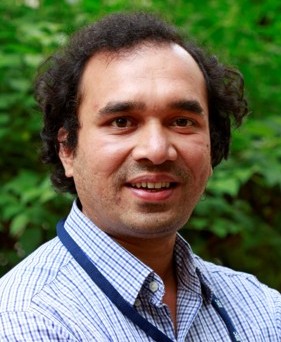
Baladitya Suri is an Associate Professor in the Department of Instrumentation and Applied Physics at the Indian Institute of Science (IISc). He received his B.Tech. in Engineering Physics from IIT Madras and his Ph.D. in Physics from the University of Maryland, College Park, USA, followed by postdoctoral research at Chalmers University of Technology, Sweden. His research focuses on quantum information science and superconducting quantum circuits, with interests in circuit quantum electrodynamics (cQED), quantum acoustics, and microwave single-photon sources and detectors. He is the Coordinator of the IISc Quantum Technology Initiative (IQTI), where he facilitates interdisciplinary quantum research and education activities across the Institute. Additionally, he currently serves as the Chair of the Office of International Relations (OIR) at IISc, fostering international academic collaborations and global partnerships.
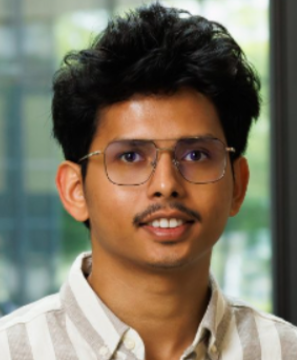
Aravind Plathanam Babu is a DST INSPIRE Faculty in the Department of Instrumentation and Applied Physics at the Indian Institute of Science (IISc). He received his Ph.D. in Engineering Physics from Aalto University, Finland. Prior to joining IISc, he was a Postdoctoral Researcher at the University of Luxembourg (2025) and the University of Oulu, Finland (2022–2024). His research focuses on applied quantum computing, spanning hybrid quantum algorithms, superconducting quantum devices, quantum error correction, quantum software architecture, and hardware-aware quantum computing.
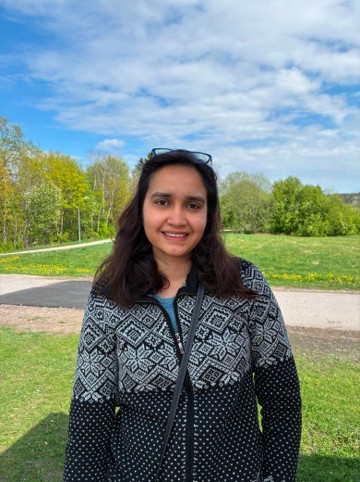
Siddhi Khaire is a Postdoctoral Researcher at the Quantum Computing and Devices (QCD) Laboratory, Department of Applied Physics, Aalto University, Finland. She received her Ph.D. from the Quantum Technologies Laboratory at the Indian Institute of Science (IISc), where her research focused on microwave single-photon sources and the development and optimization of tantalum-based superconducting devices for high-coherence qubits. Her current research focuses on the design and optimization of Single Flux Quantum (SFQ) devices for the calorimetric readout of superconducting qubits, advancing scalable superconducting quantum computing technologies.
For queries, please contact,
Dr. Aravind Plathanam Babu, DST INSPIRE Faculty Fellow, Department of Instrumentation and Applied Physics Indian Institute of Science aravindp@iisc.ac.in
Dr. Siddhi Khaire, Postdoctoral Researcher, Department of Applied Physics Aalto University siddhi.khaire@aalto.fi
This webinar series is supported by,
Office of International Relations, Indian Institute of Science
IISc Quantum Technology Initiative (IQTI)
InstituteQ, The Finnish Quantum Institute and,
FICORE, Finnish Indian Consortia for Research and Education